







Search Results for: the coffee belt

Global Coffee-Growing Regions Illustrated Guide: A Full Analysis of the Coffee Belt's Latitudinal Range and Variety Types
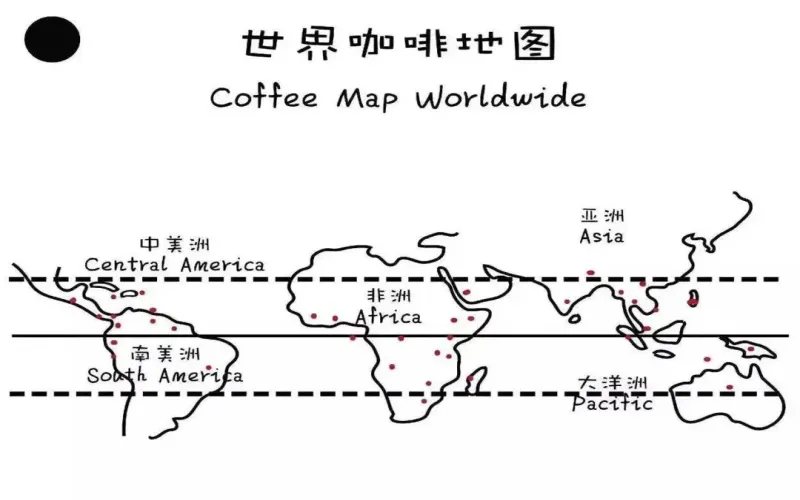
Coffee trees cannot be grown just anywhere—they have rather demanding climate requirements. Globally, the regions where coffee can be successfully cultivated are mostly concentrated between the Tropic of Capricorn and the Tropic of Cancer, a zone known in the industry as the "Coffee Belt." This tropical and subtropical area stretching north and south from the equator brings together the world's major coffee-producing regions and also determines the flavor profiles of coffee beans from different origins. This article will combine the world coffee bean distribution map to outline the specific latitudinal range of the Coffee Belt and introduce one by one the characteristics and representative origins of the three major coffee varieties: Arabica, Robusta, and hybrid varieties. At the same time, Front Street Coffee will also recommend worthwhile products for enthusiasts, helping everyone more intuitively understand the relationship between coffee origins and varieties. [more…]
What Is the Coffee Belt: Why Coffee Is Grown on Both Sides of the Equator
Open the world coffee-growing regions map, and you'll notice an interesting pattern: the major growing regions are almost all concentrated in a band on either side of the equator. This band is called the Coffee Belt. Understanding it means understanding the broad framework of coffee origins and flavors. Where is the Coffee Belt? The Coffee Belt lies roughly between the Tropic of Cancer and the Tropic of Capricorn, that is, [more…]
Analysis of the Global Coffee Golden Belt: A Discussion of Suitable Coffee-Growing Regions and the Conditions of Yunnan's Producing Areas
Coffee trees are quite particular about their growing environment, and not just any piece of land can successfully cultivate them. Within the zone between 25° south latitude and 25° north latitude on Earth, where temperatures are moderate, there is no threat of frost, and annual rainfall is sufficient, lies what is recognized as the coffee "Golden Belt." Currently, 79 countries and regions around the world are engaged in coffee cultivation and production, and Yunnan, China, is among them. Due to differences in terroir such as latitude, altitude, soil, sunlight, temperature, and humidity, each region nurtures distinctly different coffee flavors. The taste and mouthfeel of coffee beans are about 70% determined by varietal genetics, while the remaining 30% comes from the ecological conditions of where they are grown. The following article will sort out in detail the distribution logic of the Golden Belt and answer whether Yunnan is a region suitable for coffee cultivation. [more…]
Traveling Along the Coffee Belt: How Terroir Shapes a Pour-Over
Stretching between the Tropic of Cancer and the Tropic of Capricorn lies a coffee belt. Every producing region along this belt tells its own coffee story through its unique altitude, soil, climate, and cultural traditions. For pour-over enthusiasts, understanding a region's terroir is like traveling the world with a flavor map in hand. The story begins with Ethiopia [more…]

Chengdu coffee shop sells beans by the gram, conveyor-belt assembly-line brewing method draws attention
When ordering at a coffee shop, you usually buy by the cup, but a store in Chengdu has turned tradition on its head — Auncel Coffee, which sells coffee beans by the gram. Customers pick their own beans, have them weighed, and then a conveyor-belt assembly line handles grinding and brewing. This small shop near Tianfu Square in Jinjiang District, with its minimalist black-and-white style and an L-shaped laboratory-like long bar, has drawn plenty of coffee lovers looking to check in. Bean prices range from 0.28 yuan to 1.88 yuan per gram, and a cup of coffee ends up costing anywhere from a few yuan to thirty or forty yuan. Whether this model can gain a foothold in the fiercely competitive coffee market is worth watching. [more…]
Global Coffee Bean Producing Regions Explained: An Overview of Coffee Belt Climate Characteristics and Flavor Differences Across Three Continents
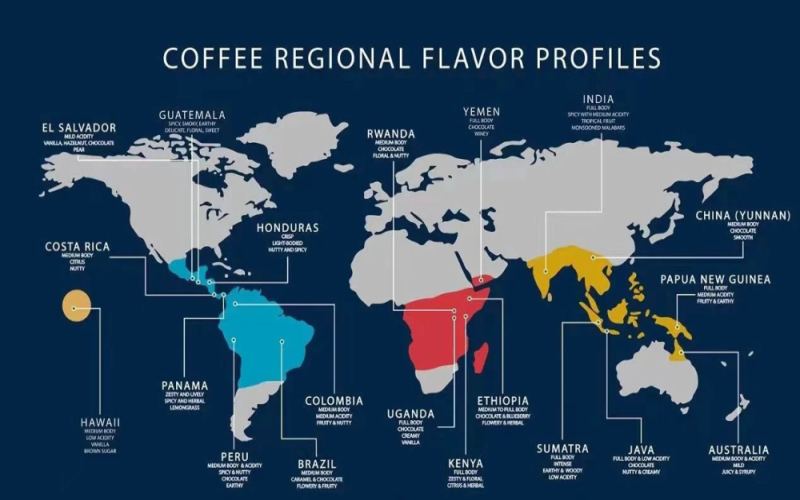
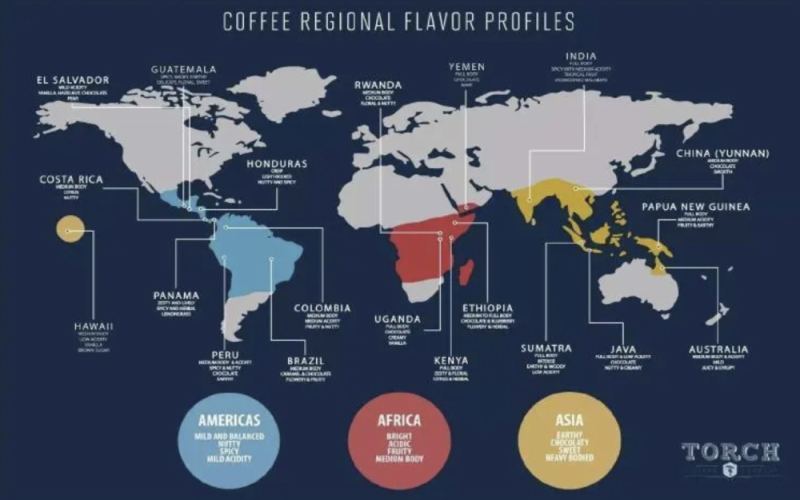
The growth of coffee trees has strict requirements for the natural environment. The world's major coffee-producing regions are concentrated in a narrow strip between the Tropic of Cancer and the Tropic of Capricorn, known in the industry as the Coffee Belt. This region spans Africa, Central and South America, and Asia, with an average annual temperature above 20 degrees Celsius, warm weather year-round, frost-free winters, abundant sunshine, and ample rainfall, providing ideal growing conditions for coffee trees. Even coffee of the same variety, when grown in different countries or regions, can present completely different flavors in the cup—differences in altitude, climate, and soil give each bean its own unique regional imprint. Front Street Coffee has repeatedly verified this pattern in daily cupping sessions. Starting from the characteristics of producing regions across three continents, this article will sort out their respective flavor trends and representative coffee beans. [more…]
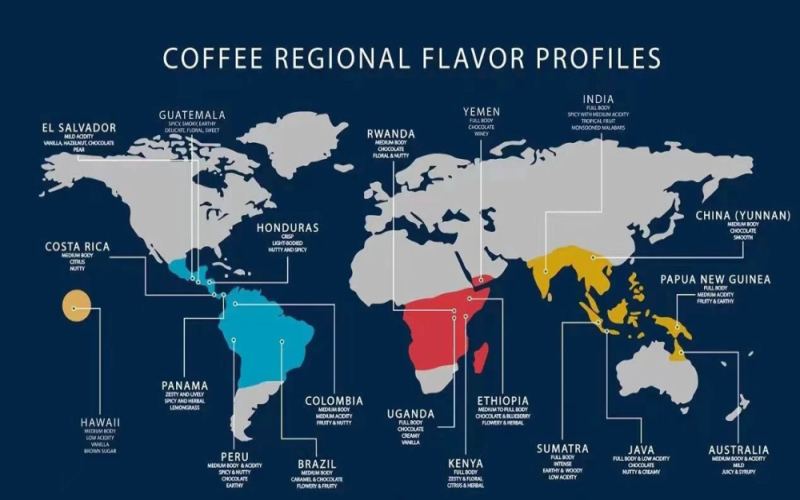
Coffee Region Basics: Flavor Differences and Representative Beans of the African, Central and South American, and Asian Coffee Belts
The Coffee Belt refers to the tropical and subtropical regions where the average annual temperature exceeds 20°C, with warm seasons year-round, frost-free winters, abundant sunshine, and ample rainfall—conditions highly favorable for coffee tree growth. Even among coffees, beans from different origins vary enormously in flavor; even the same variety grown in Panama and neighboring Costa Rica will perform differently. Flavor differences are not only related to variety—altitude, climate, and soil also profoundly influence the formation of coffee flavors, allowing one to identify the origin with a single sip. Front Street Coffee has found in daily cupping sessions that African beans typically have brighter acidity, Central and South American beans have more layered flavors with softer acidity, and Asian beans are full-bodied and steady, with strong taste and low acidity. This article will combine several representative beans from Front Street Coffee to analyze the flavor characteristics of the three major origins. [more…]
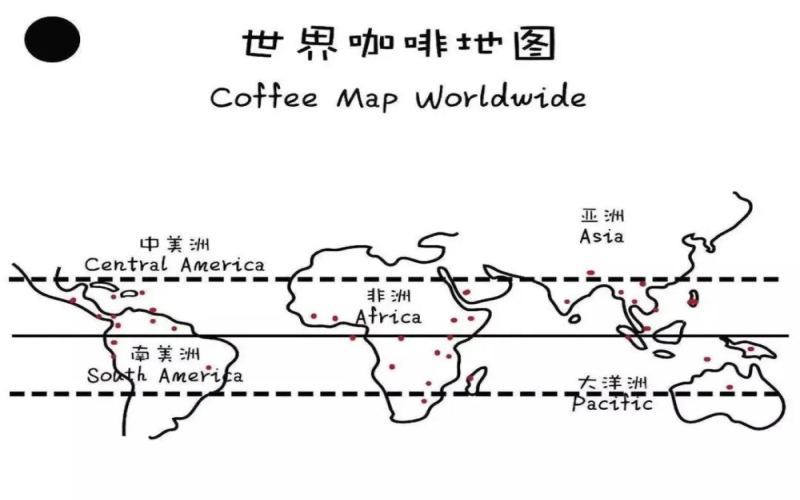
A Panoramic Overview of Latin American Coffee Origins: From Brazil and Colombia to Niche Producers Like Cuba and the Dominican Republic
Coffee trees cannot be grown just anywhere in the world. They only grow in a narrow belt between the Tropic of Cancer and the Tropic of Capricorn, commonly known as the "Coffee Belt." This golden growing belt nurtures three major coffee-producing regions—Latin America, Asia-Pacific, and Africa. Among them, Latin America covers Mexico, Central America, the West Indies, and South America, and is known for its balanced, rich, and full-bodied flavors. The region includes thirty-three countries and several non-independent territories. It is home to major producers such as Brazil, Colombia, Costa Rica, Guatemala, and Panama, as well as relatively niche origins such as Cuba, the Dominican Republic, Venezuela, and Hawaii in the United States. Front Street Coffee will guide you through the coffee history and current situation of these countries one by one. [more…]
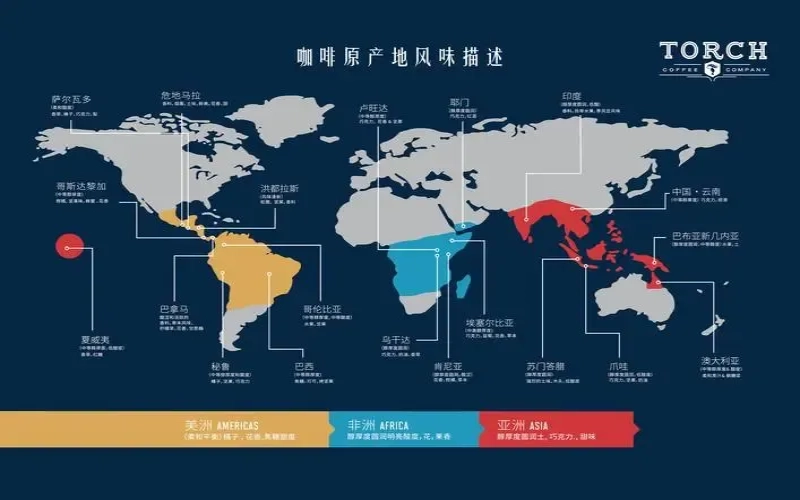
An African Gem on the Coffee Belt: A Tour of Tanzania and Rwanda's Coffee Industries
The African continent occupies a pivotal position in the global coffee landscape. Beyond the well-known Ethiopia and Kenya, it is also home to several distinctive coffee-producing countries. This article focuses on Tanzania and Rwanda, guiding you through the coffee-growing history, industry evolution, and flavor characteristics of these two nations. Tanzania has earned the reputation of "coffee gentleman" thanks to its Typica coffee beans from the Kilimanjaro region, while Rwanda has re-emerged after a period of turmoil, showcasing unique potential through its Bourbon varieties. Meanwhile, Front Street Coffee's Kenya and Tanzania products will also provide you with tasting references. [more…]
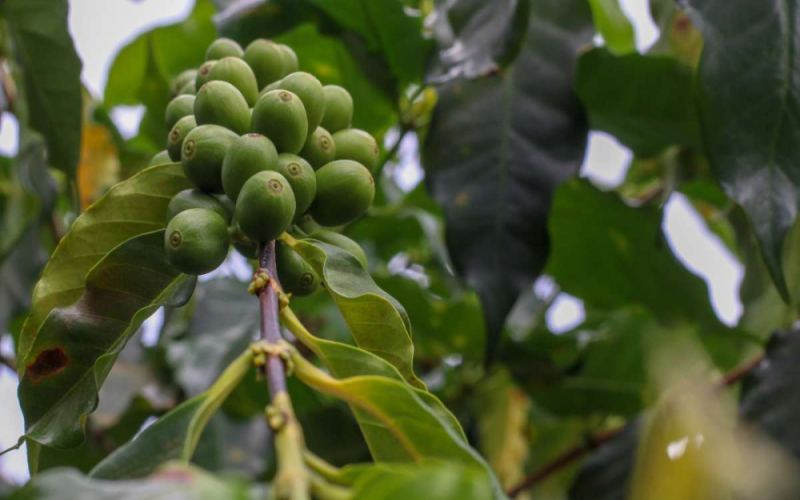
Top Ten Coffee Producing Countries Worldwide: Flavor Characteristics and Taste Analysis of Major Arabica Origins
The coffee tree is an evergreen shrub that thrives in subtropical and tropical regions, mainly distributed across the area between the Tropic of Cancer and the Tropic of Capricorn, a zone also known as the Coffee Belt. However, not every coffee seedling within the Coffee Belt is guaranteed to grow well—other environmental conditions must also be taken into account. Although the coffee tree is a tropical plant, it cannot tolerate extreme heat and humidity, nor can it withstand all-day sunlight. As a result, most coffee is grown on well-drained hillsides, where temperatures are moderate and sunlight hours are shorter than on flat land. It is precisely these conditions that explain why Africa, despite having most of its territory within the Coffee Belt, is not the highest producer. Currently, Asia accounts for 32% of global production, Africa 12%, Central America 13%, and South America 43%. Next, Front Street Coffee will introduce the top ten coffee-producing countries by output and the characteristics of their coffee beans one by one. [more…]
From Coffee Cherry to Cup: Coffee Cherry Structure Diagram and Full Analysis of Green Bean Processing Workflow
Many people drink coffee every day, yet have never seen what a coffee fruit actually looks like. Coffee cherries resemble cherries, turning red when ripe, and their internal structure determines the final form of the coffee bean. This article uses anatomical diagrams to show in detail the exocarp, pectin layer, endocarp, silver skin, and seed of the coffee fruit, and traces the complete chain from harvesting, washing or drying, roasting, to extraction. It also introduces the distribution characteristics of the global coffee belt, as well as the basic differences among the three major native species: Arabica, Robusta, and Liberica. The article also recommends related products from Front Street Coffee, helping enthusiasts understand more intuitively the transformation of coffee from fruit to cup. [more…]
Flavor, Grade Classification, and Recommended Famous Brands of Hawaiian Kona Coffee Beans Typica Variety
Kona coffee and Blue Mountain coffee were once known as "one king and one queen," representing the pinnacle of island-style specialty coffee. Although the growing elevation in Hawaii's Kona region is mostly between 200 and 700 meters, unable to reach the 1,200-meter standard often cited for specialty coffee, its unique terroir and strict grading system have kept Kona coffee beans firmly among the top-tier coffees. This article will systematically review the historical origins of Kona coffee, the localization process of the Typica variety, and the five grades of Type 1 standard beans, with a focus on introducing the Queen Estate Extra Fancy-grade Kona coffee selected by FrontStreet Coffee, including its region information, roasting parameters, and brewing suggestions, to give you a comprehensive understanding of this Hawaiian treasure with elegant floral aromas and a smooth mouthfeel. [more…]
Analysis of Coffee Tree Potted Cultivation and Growing Region Conditions: From Plant Classification to Artificial Planting Practices
Coffee, this everyday beverage, originates from the fruit of the coffee tree. This article begins with its botanical classification and systematically examines the origins, growth habits, and suitable cultivation regions of the coffee tree. The coffee tree belongs to the genus Coffea in the family Rubiaceae and is an evergreen shrub, naturally distributed across the "Coffee Belt" between the Tropic of Cancer and the Tropic of Capricorn. Beyond commercial cultivation, the coffee tree can also be grown as an ornamental potted plant, displaying its unique charm in artificial environments. The article will explain in detail the coffee tree's growth cycle, pruning management, and planting applications in coffee shops, accompanied by multiple images to aid explanation, helping coffee enthusiasts gain a more comprehensive understanding of this plant's natural and cultivated growing requirements. [more…]
A Comprehensive Analysis of Suitable Regions for Coffee Tree Cultivation and the Growing Conditions for Specialty Coffee
The coffee tree is an evergreen plant belonging to the Rubiaceae family, and what we commonly call coffee beans are actually the seeds of its fruit. Climate is the core factor determining coffee cultivation. Coffee trees are only suitable for growing in tropical and subtropical regions, and the "Coffee Belt" between 25 degrees north and south latitude is their main planting area. However, being located within this region does not mean that high-quality coffee can be produced everywhere; conditions such as temperature, rainfall, soil fertility, sunlight intensity, and altitude must all match strictly. This article will provide a detailed overview of the most ideal growing environment for coffee trees and introduce a herbaceous coffee that can be cultivated in most parts of China, while also retaining related recommendations from the Front Street brand. [more…]
A Complete Analysis of the Hawaii Kona Coffee Region: The Unique Combination of Typica Variety, Volcanic Soil, and Washed Processing
Coffee typically grows within the cultivation belt between the Tropic of Cancer and the Tropic of Capricorn, and the continental United States does not fall within this zone. However, the state of Hawaii, with its unique geography and climate, has successfully produced the world-renowned Kona coffee. The Kona growing region is located on the slopes of the Big Island, with fertile volcanic soil and natural shade, primarily cultivating the Typica variety introduced from Guatemala. Because the hillside terrain prevents mechanized operations, the entire process here relies on manual planting and harvesting, and combined with the Hawaiian mountain spring water used in the washed processing, this creates the bright, clear appearance and pure, gentle flavor of Kona coffee beans. This article will provide a detailed introduction to the geographical conditions, historical context, variety characteristics, and processing methods of the Kona growing region, giving you a comprehensive understanding of this low-latitude yet high-altitude coffee treasure. [more…]
Hurricane John Devastates Southern Mexico's Coffee Belt: 16 Dead, 100,000 Households Without Power, New Crop Under Pressure
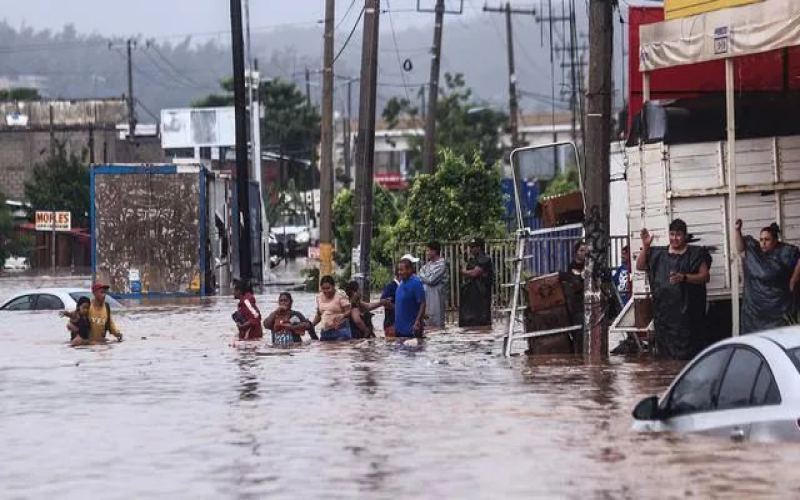
After Hurricane "John" made landfall in southern Mexico, it caused at least 16 deaths, damaged more than 700 homes, and left about 100,000 users without power, with Guerrero and Oaxaca states hit especially hard. More critically, 95% of Mexico's coffee production is concentrated in the south, and the current period is when coffee is fruiting; torrential rain knocked fruit off the trees, flooded coffee plants, and the risk of landslides compounded the damage, putting the expected increase in output for the 2024/25 season at risk of being revised downward. At the same time, global coffee prices are already at high levels due to reduced production in places such as Brazil and Vietnam, and with Mexico now hit by another climate shock, prices are unlikely to fall in the short term. [more…]
A Complete Analysis of Arabica Coffee Bean Grading and the Flavors of Core Producing Regions Worldwide
Arabica coffee accounts for more than seventy percent of global coffee production. Its cultivation conditions are demanding, with high requirements for altitude, soil, and microclimate, so different producing regions display distinctly different flavor profiles. This article focuses on the basic growth characteristics of Arabica and the distribution patterns of the Coffee Belt, systematically reviewing the flavor styles and processing methods of representative origins across the three major growing regions of Latin America, Africa, and Asia-Pacific, including Brazil Cerrado, Colombia Huila, Guatemala Huehuetenango, Costa Rica Tarrazu, Indonesia Sumatra, China Yunnan Baoshan, and Ethiopia Yirgacheffe. It also intersperses introductions to Front Street Coffee's daily drinking bean series, covering the selection approach and product characteristics for each producing region, providing coffee lovers with a complete and practical guide to Arabica origin flavors. [more…]
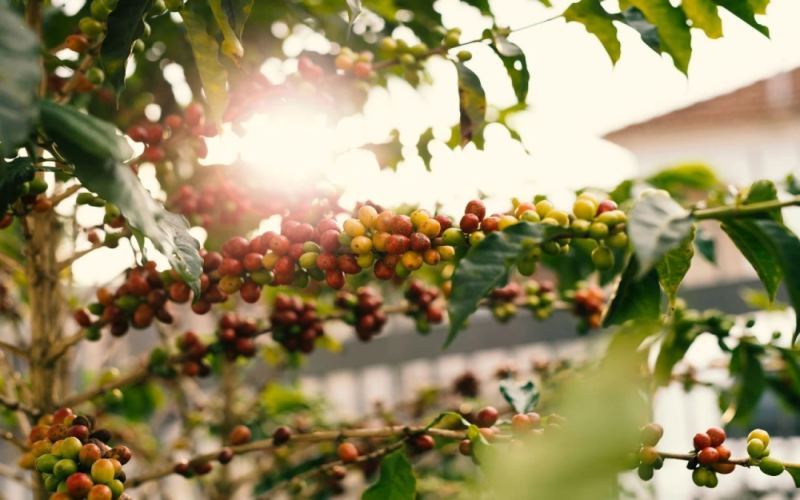
From Fruit to Cup: A Comprehensive Analysis of Coffee Cherry Structure and Processing
Have you ever wondered how the coffee you drink every day actually evolves from a tiny fruit? Although coffee is often likened to "juice," its production process is completely different from that of true fruit juice. This article will take you deep into the complete structure of the coffee fruit, analyzing the characteristics and roles of each part one by one, from the outer skin, pulp, and pectin layer to the parchment and silver skin. At the same time, we will also explore the geographical distribution of the Coffee Belt, the hardships of harvesting, and the processing and roasting process from green beans to roasted beans. Whether you are a coffee enthusiast just starting out or a seasoned taster, this article will unveil the mystery of the coffee fruit for you and give you a deeper understanding of the coffee in your cup. [more…]
What Is Arabica Coffee? A Detailed Guide to the Origin of Its Name, Major Global Producing Regions, and Flavor Characteristics
The coffee tree is a tropical crop with rather demanding growth requirements, and the "Coffee Belt" between 25 degrees north and south of the equator provides it with an ideal habitat. As the variety with the highest share of global production, Arabica has strict requirements for altitude, temperature, and soil. This article will sort out the meaning and origin of the name Arabica, introduce the terroir characteristics of the three major producing regions—Latin America, Africa, and Asia-Pacific—and analyze one by one the flavor profiles of representative origins such as Brazil Cerrado, Colombia Huila, Guatemala Huehuetenango, Costa Rica Tarrazu, Indonesia Sumatra, Yunnan China, and Ethiopia Yirgacheffe. It will also share the selection philosophy behind Front Street Coffee's high-cost-performance everyday beans series. [more…]
A Complete Analysis of the Main Arabica Coffee Producing Regions: Flavor Characteristics of the Three Major Regions and Introduction of Representative Bean Varieties
Arabica coffee accounts for more than seventy percent of global coffee production and has extremely strict requirements for its growing environment. Starting from the coffee belt on both sides of the equator, the three major producing regions of Latin America, Africa, and Asia-Pacific each nurture distinctly different coffee flavors. This article systematically sorts out the distribution of Arabica's main producing areas, introducing one by one the terroir conditions and cupping characteristics of representative producing areas such as Brazil Cerrado, Colombia Huila, Guatemala Huehuetenango, Costa Rica Tarrazu, Indonesia Sumatra, China Yunnan Baoshan, and Ethiopia Yirgacheffe, while also sharing the selection approach of the Front Street Coffee daily drinking bean series, helping coffee enthusiasts build a cognitive framework for the basic flavors of each producing area. [more…]